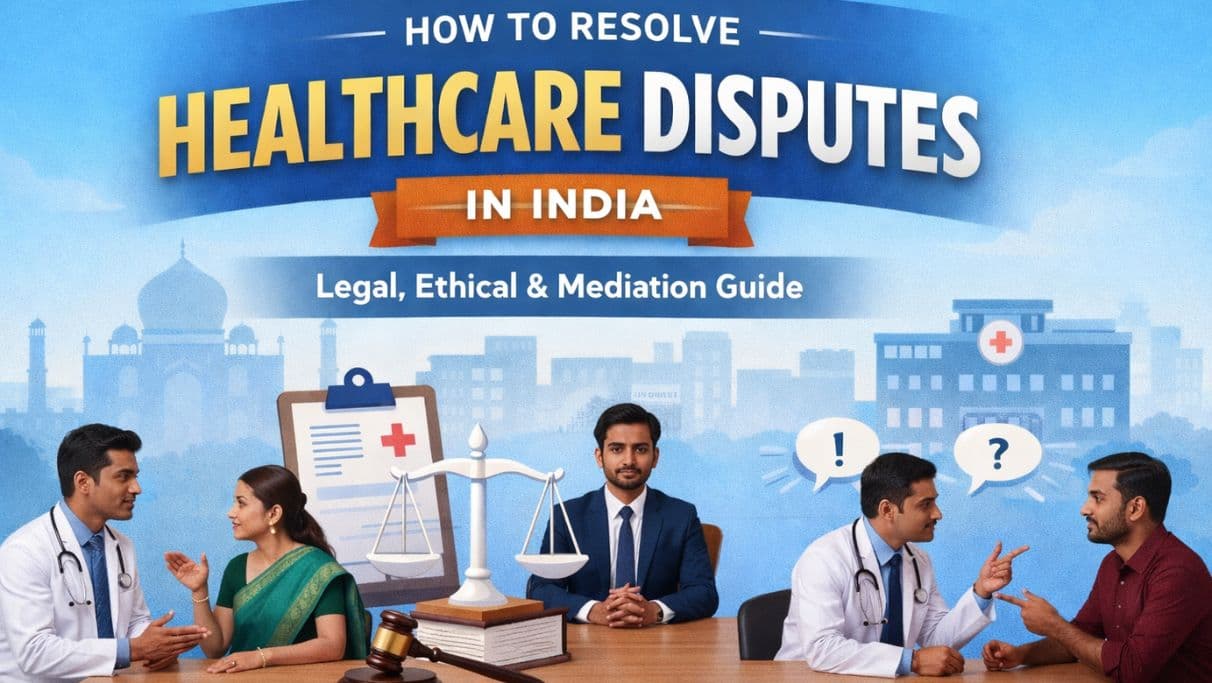
How to Resolve Healthcare Disputes: A Legal & Ethical Guide for Indian Healthcare Professionals
Introduction
Healthcare disputes are becoming increasingly common in India as medical practice intersects more frequently with legal scrutiny and patient expectations. Doctors, hospitals, and healthcare institutions today operate in an environment where even well-intentioned clinical decisions can be questioned. These disputes not only cause emotional and professional stress for healthcare professionals but can also erode patient trust and institutional reputation.
Understanding how to resolve healthcare disputes requires more than legal awareness alone. Ethical conduct, transparent communication, and structured conflict management play an equally important role. For Indian healthcare professionals, being informed about both legal obligations and ethical responsibilities is no longer optional—it is essential for sustainable medical practice and long-term professional security.
Understanding Healthcare Disputes in the Indian Context
What Are Healthcare Disputes?
Healthcare disputes refer to conflicts arising between patients and healthcare providers or institutions. These may include doctor–patient disagreements, hospital liability concerns, consent-related conflicts, billing disputes, allegations of negligence, or ethical disagreements in treatment decisions. Such disputes can emerge at any stage of care—from diagnosis and treatment to discharge and follow-up.
Why Healthcare Disputes Are Increasing in India
Several factors have contributed to the rise in medical disputes. One major reason is the inclusion of medical services under the Consumer Protection Act, which has expanded patient rights and accountability. Many professionals are now facing complaints related to deficiency in medical service under the Consumer Protection Act, often even in cases involving genuine clinical judgment.
Increased access to online medical information, heightened awareness of legal remedies, and greater media scrutiny have further intensified this trend. As a result, resolving healthcare disputes in India has become a core professional skill rather than a rare legal concern.
Common Causes of Healthcare Disputes
Communication Gaps and Consent Issues
Many disputes arise from misunderstandings rather than malpractice. Inadequate explanation of risks, outcomes, or alternative treatments often leads to dissatisfaction and mistrust. Informed consent, when treated as a formality instead of a process, becomes a frequent source of conflict.
Documentation and Record-Keeping Errors
Incomplete or unclear medical records weaken a professional’s legal position during disputes. Proper documentation not only supports continuity of care but also serves as vital evidence if a disagreement escalates.
Ethical Challenges in Clinical Decision-Making
Conflicts often emerge when clinical judgment, patient expectations, and institutional policies collide. ethical issues in healthcare disputes may involve end-of-life decisions, treatment refusal, resource allocation, or balancing patient autonomy with medical beneficence. When ethical clarity is missing, disputes become more complex and emotionally charged.
This growing complexity highlights the importance of legal and ethical awareness in healthcare, not just for compliance but for everyday clinical decision-making.
Legal and Ethical Framework for Resolving Healthcare Disputes
Role of Medical Law in Dispute Resolution
Medical law in India governs accountability through frameworks such as the Consumer Protection Act, professional misconduct regulations, and negligence standards. These laws aim to protect patient rights while defining professional duties. Understanding legal thresholds helps professionals respond appropriately instead of reacting defensively.
Importance of Ethics in Healthcare Conflict Management
Ethical principles guide decision-making beyond legal compliance. Respect for autonomy ensures informed patient choices. Beneficence and non-maleficence focus on patient welfare and harm prevention, while justice promotes fairness in care delivery. Integrating law and ethics offers a balanced approach to how to resolve healthcare disputes without escalating conflicts unnecessarily.
Role of Mediation in Resolving Healthcare Disputes
What Is Mediation in Healthcare?
Mediation is a structured process where a neutral third party facilitates dialogue between disputing parties. It is confidential, voluntary, and non-adversarial. Unlike court proceedings, mediation focuses on understanding concerns and finding mutually acceptable solutions rather than assigning blame. The Role of mediation in resolving healthcare disputes is particularly relevant in sensitive medical conflicts where relationships matter.
Why Mediation Works Better Than Litigation
Litigation is often time-consuming, expensive, and emotionally draining. Mediation, on the other hand, allows for faster resolution while preserving professional relationships and patient trust. It provides space for open communication, apology when appropriate, and collaborative problem-solving. The Role of mediation in resolving healthcare disputes is increasingly recognized as a practical alternative that reduces legal exposure and supports ethical conflict resolution.
Practical Steps to Resolve Healthcare Disputes Effectively
Early Conflict Identification
Recognizing dissatisfaction early—through patient feedback or staff reporting—can prevent escalation. Minor grievances, if ignored, often develop into formal complaints.
Transparent Communication with Patients
Clear, empathetic communication is the most effective dispute-management tool. Honest discussions about outcomes, complications, and limitations reduce misunderstandings and rebuild trust.
Internal Grievance Redressal Systems
Hospitals and clinics should have clear internal mechanisms for handling complaints. Structured grievance systems allow timely resolution without external legal intervention.
Knowing When to Seek Legal Guidance
Not all disputes require litigation, but knowing when professional legal advice is necessary is crucial. Understanding what doctors should know before legal trouble begins helps professionals protect their practice, reputation, and mental well-being.
Preventing Healthcare Disputes Through Legal & Ethical Training
Preventing disputes is far more effective than resolving them after damage has occurred. Regular training in medico-legal responsibilities and ethical decision-making equips healthcare professionals to handle complex situations confidently. Understanding patient rights, consent protocols, and documentation standards reduces risk exposure. Structured education also helps professionals internalize ethical reasoning, making how to resolve healthcare disputes a proactive competency rather than a reactive challenge.
Why Legal & Ethical Knowledge Is Essential for Healthcare Professionals
Legal and ethical knowledge empowers healthcare professionals to practice with confidence. It supports risk management, strengthens ethical decision-making, and reduces fear-driven defensive medicine. Professionals who understand their responsibilities are better equipped to communicate transparently, document accurately, and respond calmly to disputes. Continuous learning in medical law and ethics is no longer optional—it is a strategic necessity for sustainable and respected medical practice.
Conclusion
Healthcare disputes are an unavoidable reality in modern medical practice, but they are not unmanageable. When healthcare professionals combine legal awareness, ethical clarity, and effective mediation, conflicts can be addressed constructively. Mediation offers a humane alternative to litigation, while ethical practice strengthens trust and accountability. Informed professionals not only reduce disputes but also protect their careers, institutions, and patient relationships in the long run.
MedipreneurX empowers healthcare professionals with legal clarity, ethical confidence, and dispute-management expertise. Through structured medico-legal education and expert guidance, doctors learn how to prevent disputes, respond strategically, and protect their professional future.
👉 Explore medico-legal training and ethical guidance for doctors